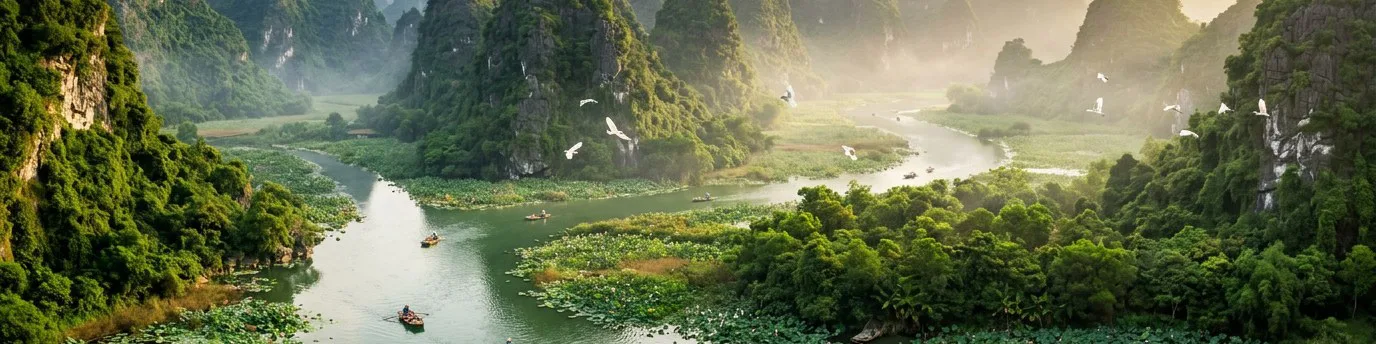
Set between two major tidal waterways—the Vam Sat River and the Long Tau River—Vam Sat Mangrove Reserve lies at the heart of the UNESCO-listed Can Gio Mangrove Biosphere Reserve in Can Gio District, Ho Chi Minh City. Established in 2000, the ecological park develops its visitor experiences entirely around intact estuarine habitats rather than artificial theme structures, making it one of the most rewarding Southern Vietnam wetland and nature reserves for a day trip from the metropolis.
Dam Doi Bat Lagoon and Post-Conflict Mangrove Recovery
One of the first highlights inside the park is Dam Doi, widely known as the Bat Lagoon. Rowing quietly into the sheltered backwaters in wooden skiffs, visitors spot colonies of large flying foxes roosting upside down beneath the high foliage of mature mangrove trees. Because fruit bats are acutely sensitive to noise and environmental disturbance, they only settle in undisturbed, unpolluted sanctuaries. While drifting near Dam Doi, travelers also enjoy traditional mud-crab angling, catching hefty, firm-fleshed mangrove crabs that can be prepared fresh for lunch.
The lush canopy visible today represents an extraordinary story of ecological restoration. Decades ago, extensive stretches of Can Gio suffered severe defoliation during wartime, leaving behind barren tidal mudflats. Through sustained human reforestation and strict forestry stewardship, the wetland recovered its vast, majestic greenery. International conservation specialists regularly cite the 75,740-hectare Can Gio mangrove forest as one of the best-restored and best-managed coastal ecosystems in Vietnam and worldwide—serving scientific research, environmental education, and low-impact nature travel alongside destinations like waterfront bamboo recreation at Tre Viet Eco-Tourism Zone.
Crocodile Lagoon, High-Salinity Float Pool, and Estuarine Cuisine
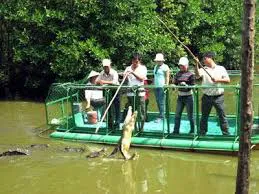
From Dam Doi, motorboats carry guests deeper into the waterways toward the crocodile conservation swamp, initially stocked with 40 native saltwater and Siamese crocodiles living in a semi-wild wetland enclosure. Visitors observe how these apex reptiles bask and ambush prey, and adventurous guests can step aboard a specialized crocodile-angling touring boat engineered from buoyant composite fiberglass with balanced air chambers and enclosed on all sides by heavy-duty B40 steel mesh.
Returning to the central visitor hub before midday, travelers can cool off in a remarkable high-salinity mineral pool. Even guests who do not know how to swim discover that they float effortlessly on the surface without sinking: at 30% salinity—roughly ten times the salt concentration of ordinary seawater, contrasting sharply with unspoiled coastal travel on Quan Lan Island—the dense brine keeps the human body naturally buoyant enough to recline and read a book on the water. Afterward, Vam Sat Restaurant serves locally harvested estuarine specialties including river shrimp, mangrove crabs, fish, oysters, sea snails, and savory grilled or braised mudskippers, followed by a restful afternoon swaying in riverside hammocks.
The 100-Hectare Bird Sanctuary and Global Ecotourism Recognition
Because Vam Sat sits within the core conservation zone of the Can Gio Biosphere Reserve, every operational decision follows guidance from wildlife biologists and wetland ecologists. That science-led approach enabled rangers to establish a natural bird sanctuary spanning more than 100 hectares. By maintaining quiet roosting trees and supplementing natural foraging grounds, forest wardens have attracted thousands of resident and migratory waterbirds, including threatened species listed in both the Vietnam Red Data Book and the global IUCN Red List, rivaling lotus marsh bird sanctuaries across Dong Thap. Nearby, a semi-wild forest reserve shelters native deer, wild boars, pythons, water snakes, and monitor lizards to help visitors understand the region's woodland biodiversity.
Underpinning this wildlife abundance is Can Gio District's most complete tidal aquaculture dike and sluice-gate network, which allows forest protectors to safeguard mangrove stands while regulating year-round brackish water levels that sustain fish and crustaceans for nesting storks. Recognizing these conservation milestones, the World Tourism Organization officially designated Vam Sat Mangrove Ecological Tourist Area in July 2003 as one of Vietnam's two internationally recognized Sustainable Ecotourism Development sites. Supported by Ho Chi Minh City People's Committee zoning protection for the Vam Sat and Dam Doi sanctuaries, the reserve continues to welcome students, researchers, and nature travelers from around the world.
For day-trippers departing central Ho Chi Minh City, reaching Vam Sat Mangrove Ecological Park takes roughly ninety minutes southward across Binh Khanh Ferry along the scenic Rung Sac forest highway, followed by either a riverside road transfer or a speedboat ride down the Long Tau and Vam Sat waterways. Before concluding an itinerary, visitors can also climb the 26-meter Tang Bong Observation Tower to admire sweeping 360-degree views across the emerald mangrove canopy, winding tidal creeks, and nesting heron colonies during the April-to-October breeding season.