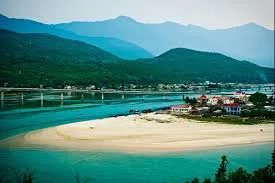
In May 2009, Lang Co Bay in Thua Thien Hue Province was officially inducted by the Worldbays Club as one of the most beautiful bays in the world. Five years after earning that prestigious international title, Lang Co Bay tourism has experienced dynamic socio-economic progress, attracting major hospitality investors while safeguarding the unspoiled coastal scenery that brought global recognition to this curved white-sand peninsula.
Sustainable Marine Conservation and the Bach Ma–Lang Co Eco-Triangle
Blessed with favorable economic geography and breathtaking coastal landscapes, Lang Co Bay occupies a prime position along the Central Vietnam Heritage Road and at the maritime gateway of the East–West Economic Corridor, linking directly to international shipping and cruise lanes through deep-water Chan May Port. Recognizing both the ecological sensitivity of its marine ecoregions and its vast visitor potential among Central Vietnam biosphere and coastal destinations, Thua Thien Hue authorities have consistently ensured that economic expansion goes hand in hand with sustainable development and strict environmental protection—the core criteria that qualified Lang Co Bay for its 2009 Worldbays honor.
Over the past five years, provincial tourism planners, local enterprises, and coastal residents have focused investment on upgrading hotels, guesthouses, and seafood restaurants while preserving the bay's pristine shoreline and mountain backdrop. Pioneering hospitality operators established early along the coast—including Thanh Tam Seaside Resort, Huong Giang – Lang Co, and Co Do – Lang Co—have steadily expanded their scale, service diversity, and brand reputation. Crucially, these resorts connect seamlessly into the regional "Golden Triangle" ecotourism circuit of Bach Ma National Park, Canh Duong Beach, and Lang Co Bay alongside the expansive Tam Giang – Cau Hai Lagoon system, complementing wider national nature routes from geothermal forest retreats at Son Kim Hot Springs to sea turtle conservation on Hon Bay Canh Island.
Hospitality Growth Metrics and Long-Term Coastal Planning
Today, the Lang Co Bay resort zone encompasses six integrated resorts and forty-five operational hotels and guesthouses supplying roughly 1,200 guest rooms and 1,800 beds, supported by dozens of coastal restaurants serving travelers. Visitor arrivals have climbed by an annual average exceeding 25 percent, while tourism revenues have grown by an average of 20 percent per year. Guests visiting Lang Co Bay now account for 16 percent of all tourist arrivals to Thua Thien Hue, served by a hospitality workforce that continues to expand in both size and professional training. Furthermore, twenty licensed tourism development projects representing more than 10 trillion VND in total registered capital are actively advancing across the peninsula.
Marking five years as a World's Most Beautiful Bay offers a timely milestone to evaluate how international recognition has uplifted this coastal town and how to guide responsible growth ahead—much as regional planners balance visitor infrastructure across lush riverside eco-parks across Dong Nai Province. For Lang Co Town to mature into a premier international eco-resort hub, urban planners emphasize synchronized transport and utility infrastructure alongside richer marine recreation services. At the same time, residents and tourism operators must uphold rigorous land, sea, and lagoon zoning oversight so waterfront construction never compromises natural sightlines, while accelerating delayed marine and lagoon eco-service projects across the bay.