
Careful preparation transforms a coastal holiday in Northern Vietnam's largest limestone archipelago into an effortless nature escape. This comprehensive Cat Ba Island travel reference brings together practical transport routes, ferry schedules, seasonal hotel booking strategies, seafood dining advice, and first-hand sightseeing itineraries across beaches, fishing villages, and biosphere trails so you can explore every corner of the island with confidence.
1. Getting There: Ferries, Speedboats, Flights, and Island Transfers
Travelers heading out to Cat Ba Island from Hanoi or southern provinces can choose among four dependable overland, rail, and maritime routes depending on group size, budget, and vehicle needs:
- By private car via Hai Phong and Cat Hai: From Hanoi, drive straight along the highway to Hai Phong City and follow signs to the Dinh Vu ferry terminal to cross over to Cat Hai Island before boarding the second ferry to Cat Ba. Ferries operate daily from 5:00 AM to 5:00 PM. At the larger Dinh Vu crossing, boats depart roughly once every hour toward Cai Vieng Pier, whereas at the narrower Ben Got channel on Cat Hai Island, smaller ferries shuttle back and forth much more frequently with minimal waiting time.
- By passenger train and hydrofoil: You can take a comfortable train from Hanoi to Hai Phong Railway Station, then transfer directly to Ben Binh Pier to purchase high-speed hydrofoil tickets across the bay to Cat Ba Town.
- Via Ha Long City and Tuan Chau Island: Taking the Quang Ninh highway route allows you to drive down onto Tuan Chau Island in Ha Long, where car and passenger ferries cross Ha Long Bay directly to Gia Luan Pier on northern Cat Ba Island. If you bring a private car or motorbike, simply follow the single scenic cross-island road winding through forested valleys straight into Cat Ba Town. Travelers without private vehicles at Gia Luan can catch the public island bus operating between 8:00 AM and 5:00 PM, charter a local taxi for roughly 500,000 VND per trip, or ride a motorbike taxi for around 80,000 VND per person.
- By air from Ho Chi Minh City or Da Nang: Domestic travelers flying north from Ho Chi Minh City or Da Nang can land directly at Cat Bi Airport in Hai Phong, then take a short taxi ride to Ben Binh Pier or the ferry terminal to connect onto a speedboat bound for Cat Ba Island.
Before boarding open-water hydrofoils or car ferries across the gulf, reviewing essential coastal sea travel preparation tips helps keep first-time island passengers comfortable throughout the crossing.
2. Choosing Hotels, Island Resorts, and Advance Booking Tips
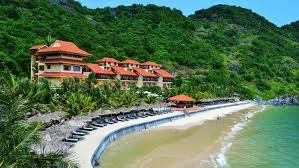
Cat Ba Town and its nearby coves offer a wide spectrum of beachfront resorts and family-run hotels. Room tariffs fluctuate significantly by season, rising sharply on summer weekends and national public holidays. To lock in fair rates and sea-view rooms, book your accommodation at least two weeks before departure. If you organize a trip at the last minute, reserving rooms through established travel agencies often secures steadier contract pricing than walk-in rates.
Well-regarded properties consistently praised by returning visitors include Cat Ba Island Resort and Spa, Cat Ba Sunrise Resort, Monkey Island Resort, Sea Pearl Hotel, Hung Long Harbour Hotel, and Holiday View Hotel. Whenever you book directly, transfer your reservation deposit promptly, record the recipient's full details and booking reference, and follow up by phone or email to verify that your payment and check-in dates are clearly confirmed. You can also browse our archive of practical ecotourism planning guides and tips to organize seasonal budgets and packing checklists ahead of peak summer months.
3. Cruising Lan Ha Bay, Cai Beo Village, and Island Beaches
Exploring Lan Ha Bay and Ancient Cai Beo Floating Village
Stretching immediately south of Ha Long Bay, Lan Ha Bay shares the dramatic karst silhouette of its northern neighbor while preserving a remarkably serene character of its own. Dotted across the emerald water are hundreds of smaller limestone islets fringed by pocket white-sand coves nestled right at the foot of vertical cliffs—much like the limestone karst boat journeys in Trang An, yet set upon calm open seawater where wooden boats can pull ashore for strolling and swimming in secluded lagoons.
Near the harbor entrance sits Cai Beo Floating Fishing Village, where more than two hundred maritime families live in buoyant timber houses anchored atop floats. Studied extensively by both Vietnamese and international archaeologists, Cai Beo preserves prehistoric cultural layers proving continuous human settlement across several thousand years. Most visitors charter local boats from Ben Beo Harbour for a three-to-four-hour circuit covering Ben Beo Pier, Cai Beo Floating Village, floating aquaculture fish cages—where buyers interested in fresh grouper or cobia should always ask and confirm exact per-kilogram prices beforehand—or onward to Ba Trai Dao (Three Peaches) Islets for swimming and rest before stopping at Monkey Island and returning to Ben Beo. Guests staying overnight at Monkey Island Resort only need a focused three-hour boat excursion exploring Lan Ha Bay, visiting the floating seafood rafts, and enjoying an hour of swimming before heading back to their bungalows.
Swimming at Cat Co Coves, Tung Thu, and Cat Dua Beaches
Summer travelers arrive on the island primarily for refreshing sea bathing. Located roughly one kilometer from the town center along a dramatic cliffside headland, Cat Co 1 and Cat Co 2 attract the liveliest crowds thanks to their broad sandy crescents and rolling surf. Nearby Cat Co 3 and the newer Tung Thu Beach provide inviting alternatives; sheltered closely by surrounding offshore islets, Tung Thu Beach features gentle, mirror-calm water without heavy breaking waves, offering a tranquil contrast to wind-sculpted coastal sand dunes in Thai Binh Province elsewhere along the northern gulf.
Travelers seeking quieter turquoise water should charter a boat deeper into Lan Ha Bay to swim along uninhabited cove beaches or cross over to Monkey Island. There, lively Cat Dua 1 Beach welcomes day-trippers, while neighboring Cat Dua 2 Beach—home to Monkey Island Resort—draws international eco-travelers with crystal-clear shallows, uncrowded sands, and complimentary sea kayaking.
4. Viet Hai Jungle Village, Cannon Fort Views, and Night Strolls
Cycling Through Primeval Forest to Viet Hai Village
From Lan Ha Bay, excursion boats dock at Viet Hai Pier after roughly forty-five minutes on the water from Ben Beo Harbour. From the pier, visitors can rent bicycles for a scenic six-kilometer ride—or hike at an unhurried pace—along a shaded forest road winding beneath towering limestone ridges into Viet Hai Village in Cat Hai District, Hai Phong. Completely encircled by steep karst mountains and the primeval rainforest of Cat Ba National Park, this isolated valley settlement sees relatively few domestic tour groups yet enchants international nature travelers. Life in Viet Hai retains a peaceful, self-sufficient rhythm reminiscent of rural Vietnam decades ago. Simple village rest stops and family kitchens welcome hungry trekkers, and many visitors order flavorful free-range garden chickens raised naturally by villagers across open yards and hillside orchards.
Sunset Panoramas at Cannon Fort and Evening Coastal Walks
Late afternoon is the finest hour to hire a motorbike taxi up to Cannon Fort—historically known as High Point 177—perched atop a coastal peak just above Cat Co 1, 2, and 3 beaches. From its elevated observation terraces, sweeping panoramic views take in Cat Ba Island's undulating karst ridges, emerald channels, and Cat Ba Bay dotted with hundreds of anchored fishing boats. As dusk settles, the crimson sun dips behind jagged island peaks, casting warm reflections and long boat shadows across the water like a living landscape painting.
After dark, visitors can rent electric buggies, motorbikes, or four-seater family tandem bicycles—priced around 30,000 VND per hour—to cruise along the breezy waterfront promenade. Note that on weekend evenings local traffic rules close the central seafront avenue to all wheeled vehicles so pedestrians can stroll undisturbed. Many travelers also love walking the illuminated cliffside footpath connecting the three Cat Co beaches at night to breathe the cool salt air.
5. Biosphere Trails, Monkey Island, Rock Climbing, and Karst Caves
Recognized globally as a UNESCO World Biosphere Reserve, Cat Ba National Park shelters extraordinary island flora and fauna that reward unhurried exploration. Hiking beneath dense karst forest canopies or cycling along quiet park lanes immerses visitors in wild nature with opportunities to encounter rare primates such as red-faced macaques and the critically endangered golden-headed Cat Ba langur. At park trailheads and ranger stations, visitors can also taste authentic local forest products including pure wildflower honey and fragrant forest rose herbal tea.
Families traveling with children especially enjoy visiting Monkey Island, where playful troops of free-ranging macaques greet boats along the shore. Its crescent shoreline, Cat Dua Beach, ranks as the finest satellite beach around Cat Ba, framed by undulating limestone ridges across the bay. Reaching Monkey Island involves crossing roughly two kilometers of open sea as the crow flies, and guests can book rustic beachfront rooms at Monkey Island Resort to spend a quiet night surrounded by pure island nature.
For adrenaline seekers, sea-cliff rock climbing draws adventurous climbers from around the world. Favorite climbing crags include Dau Be Island—reached after a two-hour boat ride from Cat Ba's tourist pier—the vertical limestone bluffs near Ben Beo just two kilometers from town center, and Ba Trai Dao Islets twenty-two kilometers south of the harbor as the crow flies. Visitors swimming or staying on Monkey Island can also scramble up the jagged karst ridge behind the beach to photograph sweeping views across Lan Ha Bay.
Finally, subterranean explorers can tour remarkable limestone caverns etched into the island's northern hills. Da Hoa (Marble) Cave, tucked into the northeastern mountains of Gia Luan Commune on northern Cat Ba Island, preserves virtually intact stalactite formations despite sitting near local hamlets and remains a favorite stop on geological research and cruise itineraries. Equally impressive is Trung Trang Cave, set inside Trung Trang Valley fifteen kilometers northwest of Cat Ba Town, where cool stone passages reveal dramatic chambers of glittering, multi-layered stalactites.