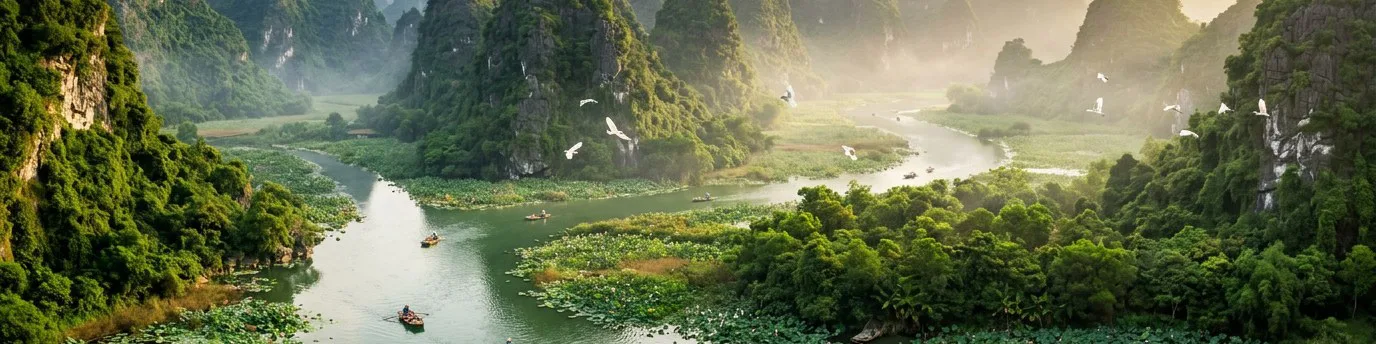
Tucked along the quiet lower reaches of the Thu Bon River in Duy Vinh Commune, Duy Xuyen District, Quang Nam Province, Tra Nhieu Ecotourism Village preserves the unhurried rhythm and timeless riverside landscape of traditional Central Vietnamese village life. Rich in centuries-old craft heritage and estuary ecology, Tra Nhieu welcomes travelers seeking authentic community-based experiences among scenic cultural and biosphere destinations in Central Vietnam.

Road and River Routes from My Son and Hoi An
Reaching Tra Nhieu fits effortlessly into a Quang Nam heritage loop by either country road or riverboat. Travelers coming overland from My Son Sanctuary can turn east at the Nam Phuoc Highway 1A intersection onto Provincial Route 610 and drive roughly 10 kilometers into Duy Vinh Commune. Visitors staying in Hoi An Ancient Town enjoy an even more atmospheric approach: boarding a wooden boat and cruising 3 kilometers southeast downstream along the tranquil Thu Bon River directly to the village landing.
Stepping ashore in Tra Nhieu, guests breathe crisp river air and wander narrow lanes shaded by fragrant flowering areca palms and neatly clipped green che tau tea-bush hedges. Generations of villagers have sustained a vibrant mix of farming, river and coastal fishing, traditional sedge mat weaving, and nipa palm leaf thatch craftwork. Local kitchens turn the bounty of the Thu Bon brackish wetland ecosystem into unforgettable country dishes—steamed river mussels, sweet sia estuary clams, crunchy jellyfish salads, seaweed noodles, seasonal estuarine ragworms (ruoi), stream goby, river shrimp, mud crabs, and paddy crabs. Along the village tour route, visitors can browse handmade woven crafts and listen to UNESCO-recognized Bai Choi folk singing, rhythmic Ho Khoan call-and-response river chants, and ceremonial Hat Ba Trao boatman melodies.
Four Signature Experiences in Tra Nhieu Village
Community hosts in Tra Nhieu organize guided village walks and boat rides around four living traditions that complement other memorable nature stops across Vietnam, including coastal forest headlands at Tien Sa in Da Nang, thermal forest springs at Son Kim, and highland pine trails in Nui Ba National Park near Dalat:
- Ban Thach Sedge Mat Weaving: Originating in the 16th and 17th centuries under the renowned name of Ban Thach Mats (Chieu Ban Thach), this cherished cottage craft endures completely by hand. Visitors watch skilled artisans harvest tall sedge reeds, split and sun-dry the fibers, dye vivid red, green, and yellow strands, and rhythmically weave geometric patterns on wooden floor looms.
- Estuary and River Fishing: Surrounded by expansive tidal flats and river channels, Tra Nhieu's fertile waters help sustain nearly ten thousand riverside residents practicing traditional fishing. Travelers arriving from Hoi An can board small wooden boats alongside local fishermen to cast circular nets, haul submerged shrimp and crab traps, and stay overnight in riverside homestays filled with evening Ho Khoan and Ba Trao folk songs.
- Areca-Shaded Garden Houses: Peaceful rural homes sit deep inside lush family orchards lined with straight rows of tall areca palms whose blossoms perfume the courtyards, framed by meticulously trimmed che tau hedges. Beneath the dappled palm shade, households cultivate organic herb and vegetable beds that go straight into fresh home-cooked meals for guests.
- Primeval Ten-Hectare Nipa Palm Forest: Covering 10 hectares of tidal wetland, Tra Nhieu's emerald water-coconut (dua nuoc) forest invites visitors to stroll across rustic bamboo footbridges or glide silently aboard small paddled sampans through cool green palm tunnels while dropping handlines for estuarine fish.